Christian School Blog
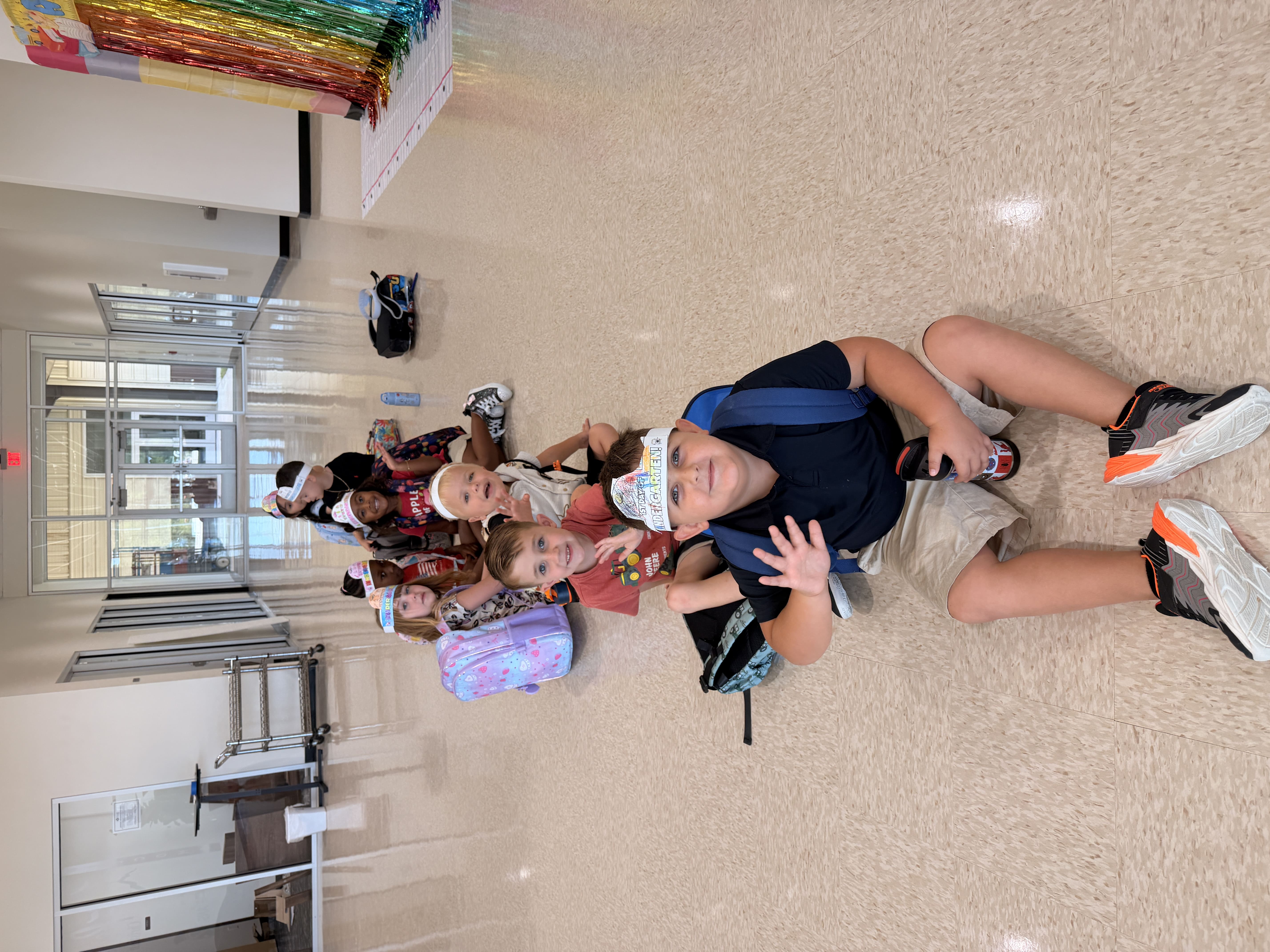
Preschool or Daycare? What the Difference Actually Means for Your Child
If you have spent an evening searching for care for your two- or three-year old, you have probably noticed that the words preschool and daycare get used as if they mean the same thing. Some centers call themselves both. Some call themselves a learning academy and are really neither.
It is confusing on purpose in some cases, and simply sloppy in others. But the difference is real, it matters more than most parents realize, and you can learn to spot it in about ten minutes on a tour.
Here is the honest version, including the part where daycare is sometimes the right answer.
What daycare is built to do
Daycare exists to care for children safely while their parents work. That is a genuinely important job and there is no shame in needing it. Good daycare centers are warm, clean, well-staffed, and full of children who are perfectly happy.
The defining features are practical ones. Long hours, often twelve of them. Enrollment that runs year round rather than on a school calendar. Flexible drop-in or full-time options. Mixed ages in some rooms. And a day organized around routine and supervision rather than around a sequence of learning objectives.
If your child is an infant, or if you need coverage from early morning to evening every weekday of the year, daycare is very likely what your family needs. That is not a compromise. It is a match.
What preschool is built to do
Preschool exists to teach. Care is part of it, obviously, but the organizing principle is different. A preschool is built around a curriculum, and the day is structured to move children through it.
That shows up in concrete ways. Children are grouped by age rather than mixed, because a two year old and a four year old are working on entirely different things. There is a scope and sequence for literacy, math, language, science, and motor development. There is a school calendar. There are teachers with early childhood credentials rather than caregivers, and there is usually accreditation from an outside body that reviews the program on a schedule.
The measurable outcome is not that your child was safe today, though of course they were. It is that your child can do something in May that they could not do in September.
The four differences that actually matter
When you strip away the marketing language, it comes down to four things. These are the questions worth asking wherever you tour.
Curriculum. Ask what curriculum they use and to see the plan for the year. A real preschool will hand you something. A daycare that calls itself a preschool will describe activities instead, which is a meaningful difference. Activities fill a day. A curriculum builds on itself.
Accreditation and licensing. Every center should be licensed by the state. Accreditation is different and voluntary, and it means an outside organization has reviewed the program against educational standards and keeps reviewing it. Ask who accredits them and when they were last evaluated.
Who is in the room. Ask about the lead teacher's training and how long she has been there. Early childhood turnover is high across the industry, so a teacher who has been in the same classroom for years tells you something about the place that no brochure will.
The shape of the day. Ask what happens between nine and noon. If the honest answer is free play, snack, outside, and a video, you have your answer. If it is small group literacy, a math concept, a science investigation, and outside time, you have a different answer.
Does my child actually need preschool?
Not every child needs a structured preschool at two. Plenty of children thrive at home, with a grandparent, or in a small in-home setting, and they walk into kindergarten perfectly ready.
What the research consistently supports is that the year or two before kindergarten benefits most children, and that the benefit comes from the quality of the program rather than the number of hours in it. A child in a strong three-day preschool program is generally better served than a child in a mediocre five-day one.
The skills that matter at this age are also not the ones parents expect. Kindergarten teachers will tell you that the children who arrive ready are the ones who can follow a two-step direction, take turns, recover from a small disappointment, and ask an adult for help. Letters and numbers come along. The rest is harder to teach later.
The question underneath the question
For a lot of families, the real question is not preschool or daycare. It is whether the place their child spends thirty hours a week is shaping them, and in what direction.
Children at this age absorb the tone of a room. They learn how adults speak to each other, whether their questions are welcome, whether kindness gets noticed. Those lessons land long before any academic one does, and they are the reason many families start looking for a program that shares what they believe at home rather than one that simply keeps the hours they need.
What this looks like at St. Peter
We are a preschool, and we are specific about what that means.
Our programs are grouped by age. Foundations serves two-year olds with two-day or four-day options. Fundamentals serves three-year olds with two-, three-, four-, or five-day options. Pre Kindergarten serves four and five year olds with the same flexibility. Age eligibility is set by September 1 of the enrollment year.
Core instructional hours run 9:00 am to 2:00 pm, with extended care available from 7:00 am to 5:00 pm for families who need the longer day. So the structure of a school sits inside hours that work for working parents.
The curriculum covers literacy, mathematics, language, cognitive development, science, and both gross and fine motor skills, aligned with Texas Education Agency standards. Religious instruction is part of every day rather than a weekly add-on. Our Fundamentals and Pre Kindergarten classes also have Discovery Day on Fridays, which is hands-on experimentation and is usually the day children talk about at dinner.
We are an accredited program through the Lutheran School Accreditation Commission, with accreditation also through TEPSAC and NLSA. Classes stay small on purpose, and it is common for our families to have the same teacher know their child for two or three years running.
And because we now offer kindergarten inside a new 20,000-square-foot campus, with plans to grow through fifth grade, families who start with us at age two do not have to start a school search again at age five.
The best way to tell the difference
Walk in during the middle of a morning. Not at drop off, not at pickup, but at ten o'clock when the day is actually running.
Watch what the children are doing. Listen to how the teacher talks to them. Ask the four questions above and see whether the answers are specific or vague. You will know quickly.
We would be glad to have you do exactly that here. Bring your child, come during the school day, and see whether this feels like the place you want them to spend their week.
Schedule a tour or learn more at stpeterchristianschool.org or call 817-491-2010.
St. Peter Christian School
15701 Cleveland Gibbs Road, Northlake, TX 76262
Serving families in Northlake, Roanoke, Trophy Club, and Justin.
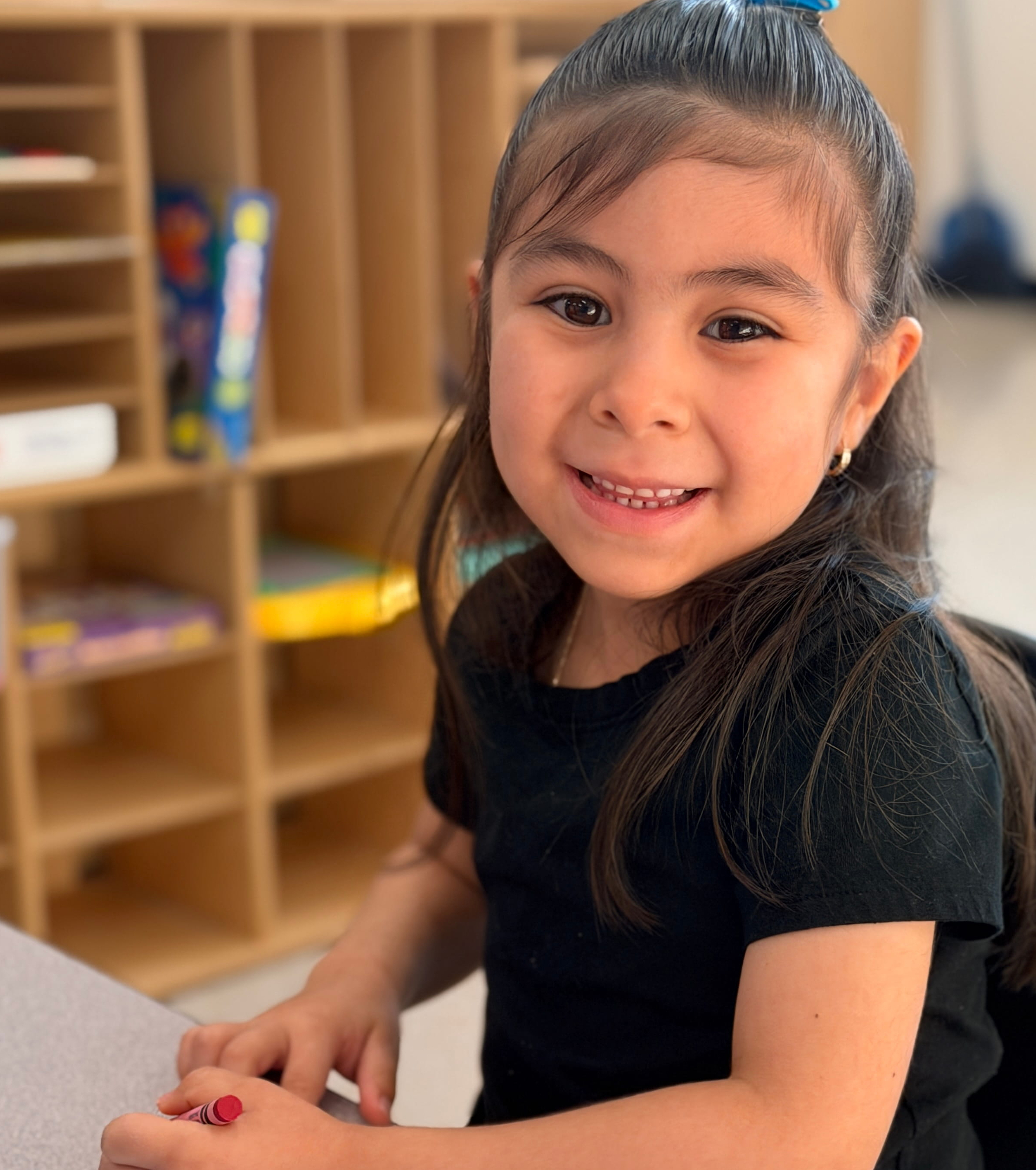
For most of the last year, we described our kindergarten in the future tense. Small classes. An experienced teacher. A new building with room to move. Faith woven through the day rather than added on top of it.
That season is over. Our inaugural kindergarten class started this August, and the building we spent a year talking about now has children in it. Backpacks in cubbies. Names on the wall. A line of five-year-olds working out where the water fountain is.
Which brings us to the question we hear more than any other once the school year begins.
Is it too late to enroll in kindergarten this year?
No. And the honest version of that answer is more useful than the short one.
School enrollment is not a door that closes in August. It moves all year. Families relocate for work. A school that looked right in July turns out to feel wrong in September. A child who seemed ready for a large classroom comes home quiet three weeks in and a parent starts looking again.
This happens every single fall, in every district, at every kind of school. It is ordinary. What is not ordinary is having somewhere to go when it happens, because most programs are full by then.
At St. Peter we have a small number of openings across our preschool age groups, and room remains in kindergarten. Small classes are the entire point of what we do, so when we say a few seats, we mean a few. We would rather keep the rooms right than fill every chair.
Why families change schools in the fall
Parents often feel like they are doing something unusual, or worse, something that will look flighty to their child. In our experience the reasons are consistent and reasonable.
Class size is the most common one. A child who gets lost in a room of twenty-five looks entirely different in a room where the teacher can reach every student in the same morning.
Fit is second. Some children need more structure than they are getting. Others need less. A five-year-old cannot always explain this, but a parent can usually feel it.
Values are third. Families who want faith present in the ordinary hours of the day, not confined to a weekly chapel service, tend to figure that out once the school year is underway.
Logistics matter too. A move, a job change, a schedule that no longer works with the school calendar.
None of these are failures of planning. They are just what happens when a real child meets a real classroom.
Why a mid-year start works in a small class
The worry we hear most often is that a child who starts in October or January will always be a step behind, socially or academically.
In a large classroom that concern has some weight. In a small one it mostly does not, and here is why.
A new student in a small class gets noticed on day one. The teacher knows within a week exactly where that child is in reading, where they are in math, and what they need. Friendships form faster because there are fewer children to meet and no established crowd to break into. And the academic gap, if there is one, gets closed with individual attention rather than a plan to catch up someday.
Five- and six-year-olds are also remarkably good at this. They tend to be far more worried about whether anyone will sit with them at lunch than about what month they arrived.
What a day looks like right now
Our core day runs from 8:00 am to 3:00 pm, five days a week. Before care starts at 7:00 am and after care runs until 5:00 pm for families who need the longer stretch.
Mrs. Karla Balduc leads the kindergarten class. She holds a master's degree in education with a specialization in reading and has more than 25 years in a classroom. Until this year, she taught our Pre-K 4 students, which means many of our kindergartners walked in on the first day already knowing their teacher. That is a quiet advantage you cannot buy.
The academics are real. Reading and language arts through HMH and IXL. Amplify Math. Nancy Larson Science. Spiritual formation through Enduring Faith. Everything is aligned to TEKS and taught the way five-year-olds actually learn, which means hands-on, active, and frequently on the floor.
We are an accredited program through the Lutheran School Accreditation Commission, TEPSAC, and NLSA.
All of it happens inside a new 22,000-square-foot campus with oversized classrooms, a gym, and a real kitchen. Room to learn, room to move, room to be a kid.
Questions worth asking when you tour in the fall
Touring while school is in session is genuinely better than touring in the spring, because there is nothing to imagine. The classrooms are full and you can see how the day runs. A few questions tell you most of what you need to know.
How many children are in the class right now, and what is the cap?
How does a new student get brought up to speed, and who is responsible for that?
What does the teacher do when a child is ahead, and how does she support a child who needs more time?
How does faith show up in an ordinary Tuesday, not just in chapel?
What does the path beyond kindergarten look like at this school?
That last one matters here. We are growing into a full elementary school serving kindergarten through fifth grade, which means the school your family chooses now can be the school your child grows up in.
What if next year is the real question
Plenty of families are not going to move a child mid-year, and that is often the right call. If you are looking ahead to the 2027 to 2028 school year instead, the useful step today is getting on our interest list.
Our classes are limited by design rather than by demand alone, so seats go early. Families on the list hear first when enrollment opens and get first access to tour dates, instead of scrambling in the spring when the calendar gets loud. There is no cost and no commitment.
Come see it while school is happening
The best way to know whether a school is right for your child is to walk the halls while the day is underway, meet the teacher, and watch your child decide for themselves.
Most parents tell us they knew within about ten minutes, usually the moment their child let go of their hand and went to look at something.
Bring your child. Bring your questions. Tours take about thirty minutes and we work around your schedule. If you have questions about tuition or the ways families cover it, we are glad to walk through that when you visit.
Scholars. Servants. Saints. That is not a tagline. It is what this month has actually looked like, one ordinary school day at a time.
Schedule a tour or learn more at stpeterchristianschool.org or call 817-491-2010.
St. Peter Christian School
15701 Cleveland Gibbs Road, Northlake, TX 76262
Serving families in Northlake, Roanoke, Trophy Club, and Justin.

When families hear the words faith-based learning, many picture the same thing: a regular school day with a Bible verse added on top. A prayer before lunch, a chapel service once a week, and academics that look no different from anywhere else.
That is not what it means to us here.
At St. Peter Christian School, faith is not a subject we teach for twenty minutes and then set aside. It is the thread running through the whole day, from the first hello in the morning to the last goodbye at pickup. We build everything around three words: Scholars, Servants, Saints. Here is what that actually looks like when the doors open and the day begins.
The morning starts with belonging, not just a bell
Before the first lesson, before pencils come out, every child is greeted by name. That sounds small. It is not. A five-year-old walking into a brand new Kindergarten wants to know one thing above all else: do I belong here? We answer that question every single morning.
The day opens with prayer and a short devotion in words a young child can hold onto. Not a lecture. A moment. We might talk about kindness, about courage, about being thankful. Then we carry that idea into the rest of the day, so by the time a student is working on letters or counting, the morning theme is already quietly at work.
This is the “Saints” part of who we are. We want children to grow into people of faith and good character, and that growth happens in small daily moments far more than in any single big lesson.
Real academics, held to a real standard
Faith-based does not mean soft. It means the opposite.
We believe every child is made with purpose, which is exactly why we take their education seriously. Our classrooms are led by an experienced teacher with more than twenty-five years guiding young learners, and our class sizes stay small on purpose so that each child gets individualized attention. A student who is racing ahead gets challenged. A student who needs another minute gets that minute. Nobody gets lost in the middle.
This is the “Scholars” part. We want children who read well, think clearly, ask good questions, and love to learn. Faith and academic excellence are not in competition here. They pull in the same direction.
Learning to serve, right where they are
Somewhere in the middle of a normal day, something ordinary happens that tells you everything about the school. A child helps a classmate clean up a spill. Another shares a crayon without being asked. A student holds the door for the class behind them.
We notice those moments out loud. We name them. We celebrate them. Because service is not a field trip we take once a year, it is a habit we build one small act at a time. Children who learn to serve at age five carry that instinct with them for life.
This is the “Servants” part, and it is one of the clearest differences families notice when they visit. The tone of a St. Peter classroom is warm, encouraging, and altruistic.
A campus built for this kind of day
All of this happens inside a brand new 22,000 square foot campus designed with children in mind. Oversized classrooms give young learners room to move and grow. A gym gives them space to run and play. A kitchen supports the everyday rhythms of school life. The building itself was made to hold the kind of full, active, joyful days we just described.
Why this matters for your family
If you want your child to be smart, you have options. If you want your child to be kind, you have fewer. If you want both, held together by faith, that list gets short fast.
That is the space St. Peter Christian School was built to fill for families across Northlake, Roanoke, Trophy Club, and Justin. Scholars who love to learn. Servants who look out for others. Saints growing in faith and character. Not on a poster, but in the actual hours of an actual school day.
Our new Kindergarten program for the 2026 to 2027 school year is enrolling now, and it is the first step of a growing elementary school. If this is the kind of day you want for your child, we would love to show it to you in person.
Come see it for yourself
The best way to understand faith-based learning is to watch it happen. Schedule a tour, walk the halls, meet our teacher, and see the classrooms.
Schedule a tour or learn more at StPeterChristianSchool.org or call 817-491 2010.
St. Peter Christian School
15701 Cleveland Gibbs Road, Northlake, TX 76262
Texas families: you may be able to use the state education savings account program to help cover tuition. Learn more at educationfreedom.texas.gov, and ask us how it works when you visit.

Summer has a way of slipping by. One week your child is splashing in the pool and the next you are staring at a calendar wondering how the first day of school got so close. If your little one is heading toward kindergarten this fall, the weeks between now and August are some of the most useful of the whole year. They are quiet, unhurried, and full of small moments you can turn into real preparation.
The good news is that getting ready for kindergarten is not about flashcards or drilling worksheets at the kitchen table. It is about confidence, curiosity, and a few everyday skills. Here is how families across Northlake, Roanoke, Trophy Club, and Justin can make the most of the summer runway.
How do I know if my child is ready for kindergarten?
Readiness shows up in three areas, and academics is only one of them. Many parents focus on whether their child knows letters and numbers, but teachers will tell you that the social and independence pieces matter just as much.
Look for signs like these:
- Curiosity and focus. Your child can sit with a story, ask questions about it, and stay interested in an activity for several minutes.
- Social comfort. They can take turns, share, and recover from a small disappointment without falling apart every time.
- Independence. They can manage simple tasks on their own, like putting on shoes, washing hands, opening a lunch container, and asking an adult for help when they need it.
- Early academics. They recognize some letters and numbers, can count a small set of objects, and enjoy being read to.
If your child is not checking every box yet, that is completely normal. Five and six year olds develop at their own pace, and a good kindergarten program is built to meet children right where they are.
Simple ways to build readiness at home this summer
You do not need a curriculum. You need a little intention woven into the days you already have.
- Read together every day. Even fifteen minutes builds vocabulary, attention, and a love of stories. Ask your child what they think will happen next.
- Count real things. Steps to the car, blueberries on a plate, toys at cleanup time. Math feels natural when it lives in everyday life.
- Practice the self help skills. Let them zip their own jacket, pour their own water, and clean up their own space. These small wins build huge confidence.
- Set up gentle routines. Begin nudging bedtime and wake up time toward a school schedule a couple of weeks before the first day so the transition is smooth.
- Talk about feelings. Naming emotions like excited, nervous, and frustrated helps children handle the big feelings that come with a new place and new friends.
The aim is not a child who already knows everything. It is a child who feels capable, settled, and excited to learn.
Why the right environment matters as much as the checklist
Here is something many readiness articles leave out. A child can be perfectly prepared and still struggle in the wrong setting, and a child who is still finding their footing can thrive in the right one. The environment shapes everything.
That is the heart of what we believe at St. Peter Christian School. Our mission is developing Scholars, Servants, and Saints to the glory of God, and that plays out in real ways every single day. Children learn their letters and their numbers, yes, but they also learn kindness, patience, and what it means to care for the people around them. Faith is not a subject we tack on at the end of the week. It is woven into how we treat one another and how we see each child as a gift.
We are also a fully accredited program through the Lutheran School Accreditation Commission, with classrooms led by experienced teachers who know how to make a child feel safe enough to take risks and grow.
What to look for when you visit a kindergarten near you
If you are touring schools this summer, a few questions can tell you a lot about whether a place is the right fit for your family.
- What does a typical day look like for a kindergartner here?
- How do teachers support children who are still building confidence?
- What is the class size, and how much individual attention will my child receive?
- How does faith and character fit into daily learning?
- What does the path beyond kindergarten look like?
At St. Peter, that last question has an exciting answer. We are opening our new Kindergarten this fall inside a brand new 22,000 square foot facility, with oversized classrooms, a gym, and a kitchen. It is the first step in growing into a full elementary school serving kindergarten through fifth grade, which means the home your family chooses now can be the home your child grows up in.
A quick word on making it affordable
If tuition has felt like the thing standing between your family and a Christian education, it is worth knowing about the new Texas Education Freedom Account program. Eligible families can receive state funds toward private school tuition and other approved expenses for the 2026 to 2027 school year. You can read the official details at educationfreedom.texas.gov, and we walked through the important dates in our recent post on what families need to know about TEFA and Kindergarten at St. Peter. If you have questions about how it could apply to your child, we are glad to help.
Ready to see it for yourself?
The best way to know if a school is right for your family is to walk the halls, meet the teachers, and picture your child there. We would love to show you around.
Kindergarten seats for this fall are limited, and they are filling. Schedule a tour or call us at (817) 491-2010 to learn more. You can also explore our new Kindergarten program and see what a year of growing into a scholar, a servant, and a saint can look like for your child.
St. Peter Christian School
15701 Cleveland Gibbs Road, Northlake, TX 76262